Advancements in Random Number Generator Protocols for Digital Lottery and Keno Systems
Written by Taylor Washington · Sep 16, 2026
Advancements in Random Number Generator Protocols for Digital Lottery and Keno Systems
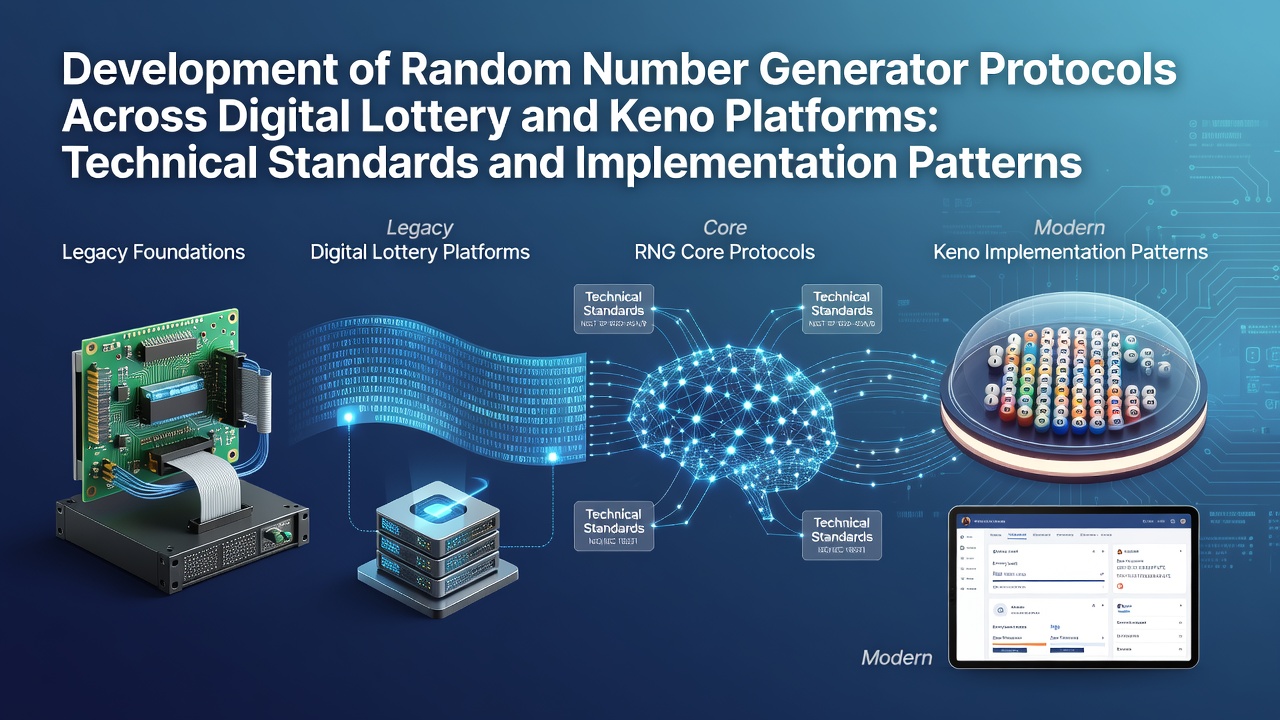
Random number generator protocols have shaped digital lottery and Keno platforms since their earliest online implementations, with developers adapting cryptographic methods to meet growing demands for fairness and security. Research from industry bodies shows that early systems relied on basic linear congruential generators, yet these quickly gave way to more robust algorithms as regulatory scrutiny increased in the late 1990s and early 2000s. Data indicates that hardware-based RNGs using thermal noise or quantum effects became standard in many jurisdictions by 2010, while software solutions continued to evolve alongside them.
Historical Shifts in RNG Design
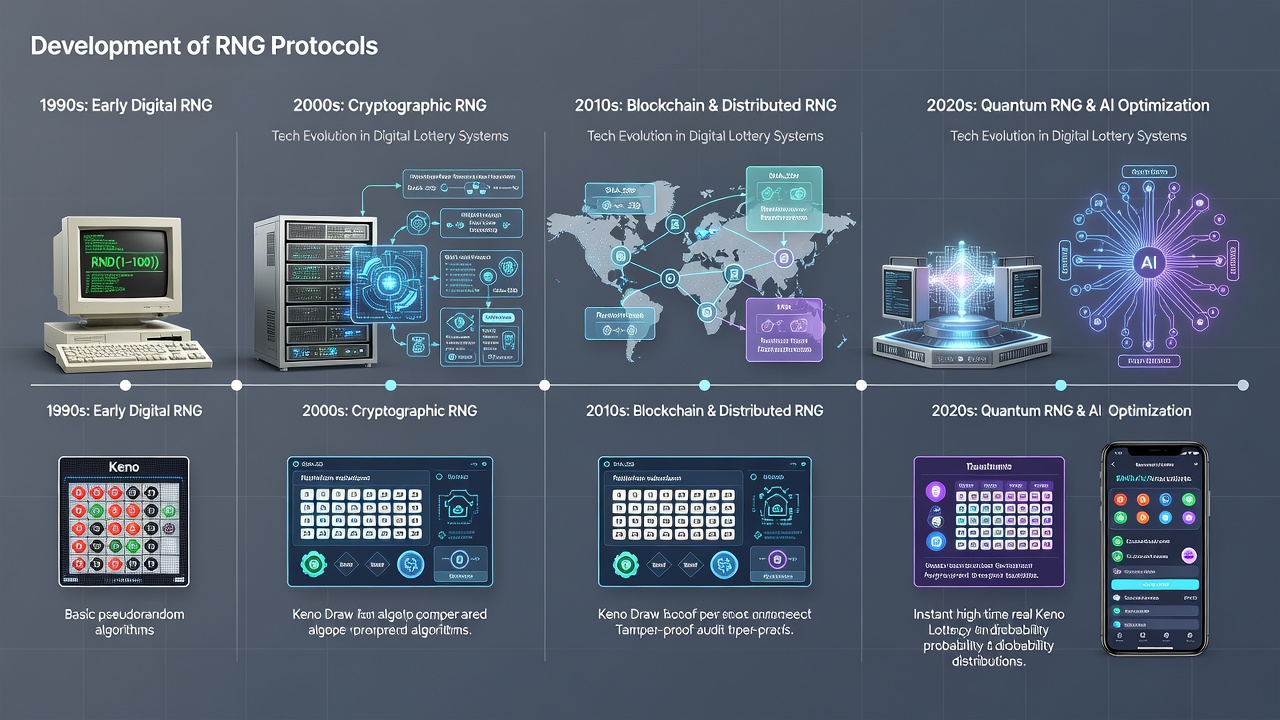
Initial digital lotteries drew from physical ball draws or simple pseudorandom sequences, but platforms soon required certified RNGs that could withstand statistical testing and external audits. Observers note that the transition accelerated when operators began offering real-time Keno draws across multiple states and countries, because consistent output across servers became essential. Figures from regulatory reports reveal that certification labs such as Gaming Laboratories International began publishing detailed testing protocols around 2005, which forced developers to document seed generation, period length, and entropy sources with greater precision.
By the mid-2010s, many platforms had adopted Mersenne Twister variants or Fortuna-based systems for their long periods and resistance to prediction, although hardware RNG modules gained favor in high-stakes environments. Experts have observed that these choices often depended on regional rules, with some North American regulators preferring hardware solutions while European and Australian frameworks allowed well-tested software implementations under strict monitoring conditions.
Current Technical Standards and Certification
Modern RNG protocols in lottery and Keno systems must satisfy standards set by organizations including teh National Institute of Standards and Technology, whose guidelines on random bit generation continue to influence testing procedures. As of September 2026, several jurisdictions are updating their requirements to include post-quantum considerations, although full adoption remains gradual. Certification processes typically involve thousands of statistical tests covering uniformity, independence, and unpredictability, with independent labs verifying that no external party can influence outcomes through seed manipulation or bias introduction.
Implementation patterns vary between centralized systems, where a single RNG server serves multiple jurisdictions, and distributed models that run parallel generators on regional nodes. Researchers have documented that hybrid approaches, combining hardware entropy sources with cryptographic post-processing, now dominate large-scale lottery networks because they balance speed with verifiable randomness. Those who manage Keno platforms often favor algorithms with extremely short draw cycles, requiring RNGs that maintain statistical integrity even under continuous high-volume requests.
Regional Implementation Patterns
Canadian provincial lotteries have integrated NIST-compliant RNG modules into their digital offerings, with public reports highlighting annual third-party audits that examine both code and live output. In contrast, several Australian state regulators emphasize continuous monitoring through automated logging systems that flag any deviation from expected statistical distributions. European frameworks outside the UK have developed their own certification pathways, often requiring operators to maintain detailed logs accessible to authorities for a minimum of five years.
One study from an academic research group in Canada examined RNG performance across multiple Keno platforms and found that systems using hardware entropy sources showed marginally lower autocorrelation in high-frequency draws, although both hardware and software solutions met regulatory thresholds when properly implemented. Observers point out that the choice between approaches frequently hinges on cost, latency requirements, and the specific rules of each licensing body rather than any inherent superiority.
Emerging Trends Through 2026
Blockchain-based verification methods have started appearing in pilot programs, allowing players to confirm that draw results match pre-published hashes, yet these remain supplementary to traditional RNG certification. Data from industry associations shows increasing interest in quantum random number generators for future-proofing, particularly among operators handling multi-jurisdictional lotteries where regulatory alignment adds complexity. Those responsible for system architecture continue to prioritize backward compatibility, since many existing lottery terminals still rely on older protocols that must coexist with newer standards during transition periods.
Conclusion
The development of RNG protocols across digital lottery and Keno platforms reflects ongoing collaboration between regulators, certification labs, and technology providers. Standards continue to tighten as computational power grows and new attack vectors emerge, while implementation patterns adapt to the unique demands of each market. Evidence from ongoing audits and research reports suggests that the field will keep evolving through at least the remainder of the decade, driven by both technological advances and regulatory updates expected in multiple regions.